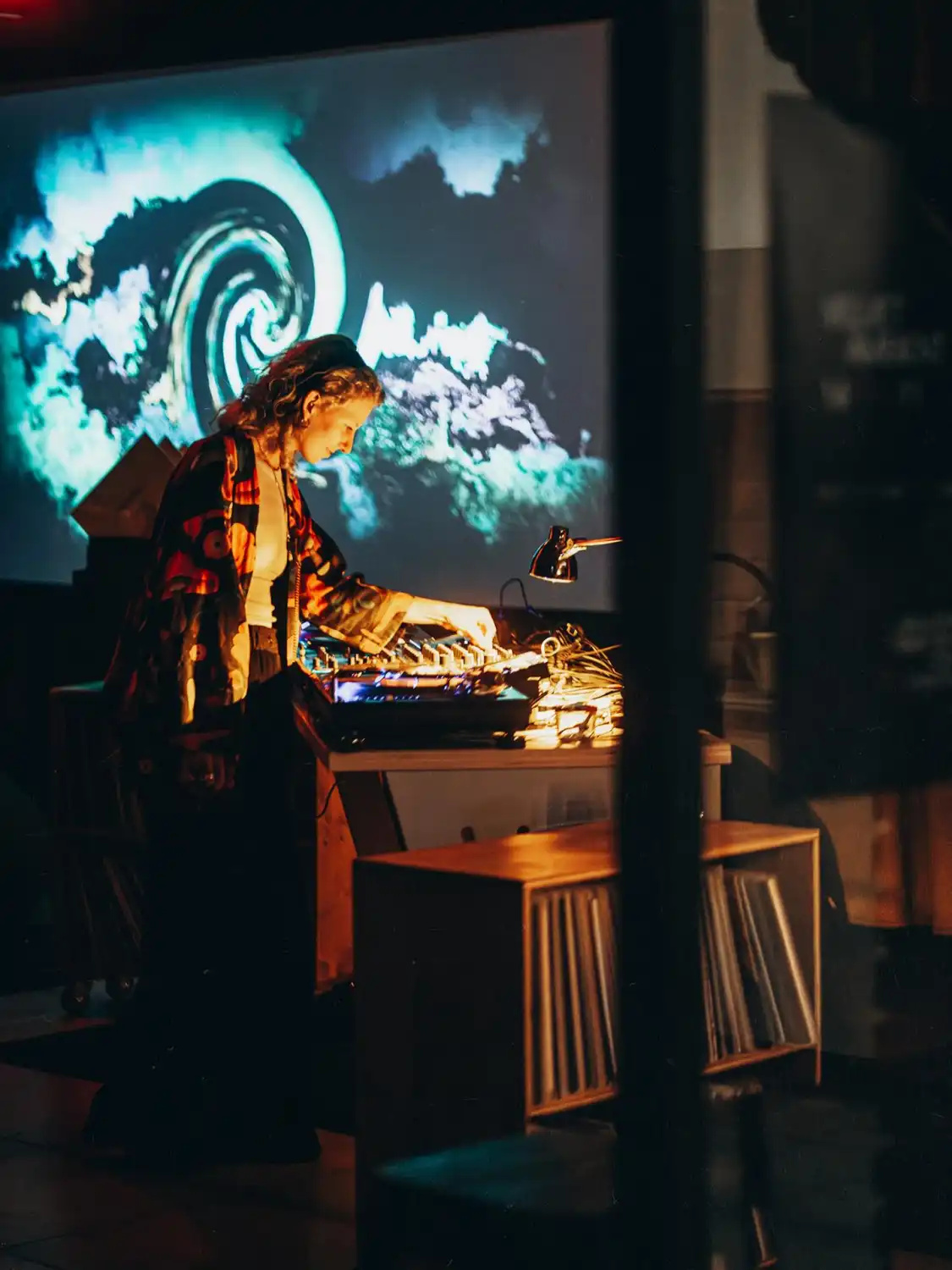




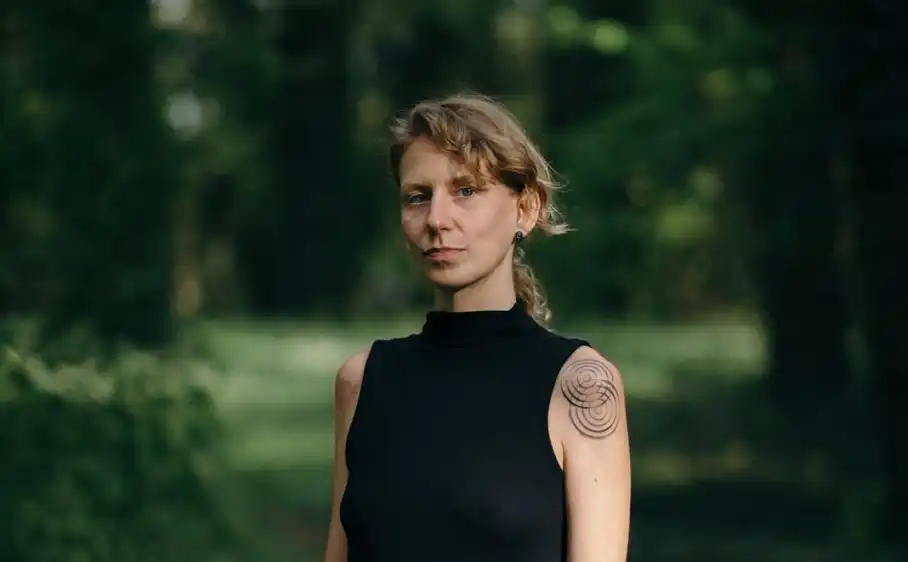
Cultural movements continue co-creating our imaginaries about the way we idealize being in this space. Some may define them as utopias, and we will answer: What would the world be without inspiring ideals that have allowed humanity to gain the right to dance freely? In these words, Aksamit, an artist featured at the upcoming TechnoFeria, shares insights into what Underground means to them, their sonic project, and much more.
- At your first performance in Medellín, what expectations do you have of the audience and the city? And what references or impressions have you received about our scene?
I’m coming without any expectations. I see this visit more as an exchange between two cultures and two worlds that have many differences. From what I’ve been hearing for years and what I’ve experienced through my interactions with people from Medellín, I expect an engaged audience, attentive listening and an openness to music that is not just entertainment, but also a form of reflection and a deeper experience.
- You’re arriving at an event with a lineup composed entirely of female talent. How do you think femininity, from the role of the DJ, impacts the electronic community that experiences it?
I’d like there to be no need to divide line-ups into ‘female’ and ‘male’ categories, with music being the sole criterion. At the same time, I know that in today’s reality, such a line-up has a symbolic dimension. It reminds us that women have long been co-creators of club culture and have an important voice within it. I hope that for other women, this will be a message that they can enter this space, feel safe there and find their place.
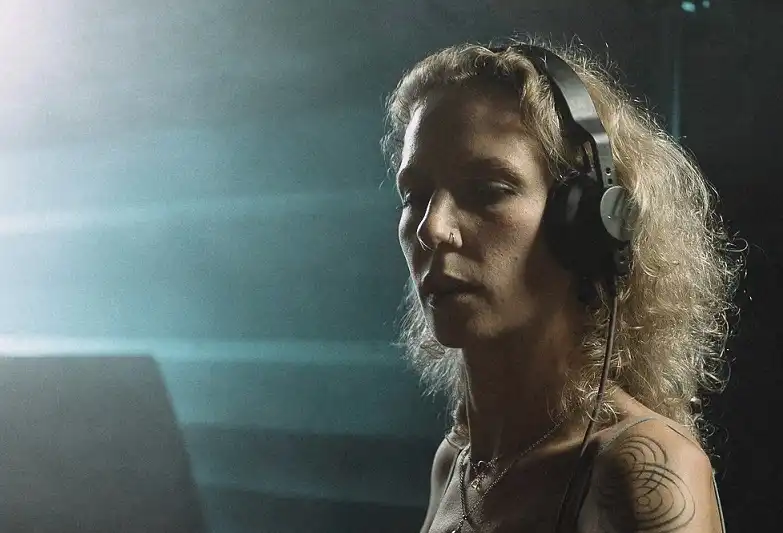
- I’ve read that your daughter accompanies you in most of your professional and artistic projects—from creating stone-based crafts to being your co-pilot on tour. How do you see Lenka absorbing all this inspiration, and what challenges do you perceive in balancing motherhood with life as a DJ?
That’s true. Lenka is my life’s companion, and my life is all about music, stone crafts and travelling. Of course, everything has to fit in with her routine as well, and that requires a lot of compromise. However, over the last six years we’ve created our own culture and language, which means that the logistics of our life fall into place naturally and with mutual understanding. For both of us, the most important thing is to have the freedom to express ourselves. As for challenges, there really are so many that I don’t know where to begin. I suppose the hardest thing is finding a shared rhythm in this dance that is life.
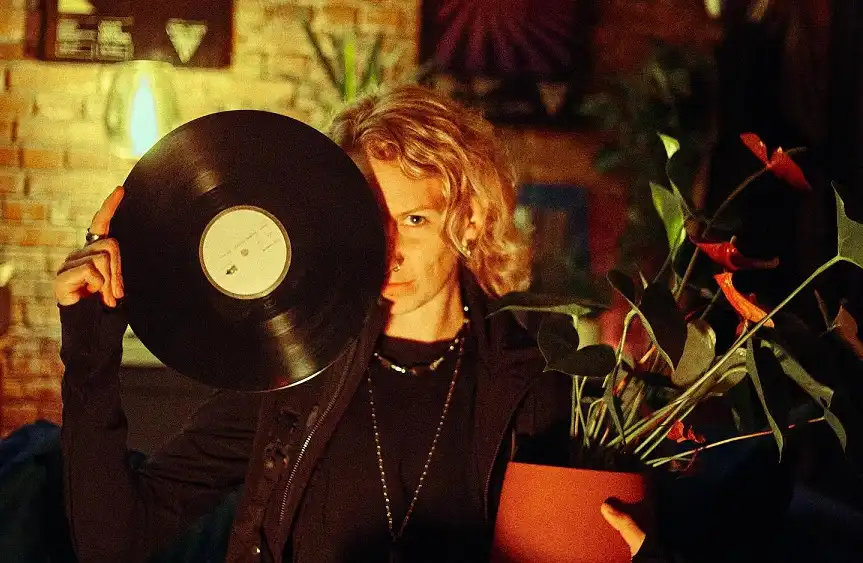
- As well as being a DJ, you’re also an educator. You run your own vinyl workshops, during which, by spending time with records, you invite participants to experience sound and the music itself more mindfully. What are these sessions like?
I run these workshops because I’m very passionate about passing on this craft. Before modern controllers, screens and digital solutions came along, DJing was born precisely from physical contact with music – from observing the record, the movement of the hands, a feel for the rhythm, and making decisions based solely on what you hear. My workshops are an invitation to return to these fundamentals. However, it’s not just about learning the technique of playing records. It’s about developing your ear, your musical imagination, your self-confidence and a deeper connection with music. I’d like participants to leave feeling more confident in their own ears and convinced that music can be not just played, but truly experienced.
- What is Aksamit’s own definition of underground culture?

Underground culture is one that cannot quite be defined and is not always visible. It arises where reality begins to restrict human freedom and where the need to create one’s own authenticity emerges. It is a form of resistance, but also a way of finding solace in the face of the difficulties and suffering that surround us, as well as the opposition to commercialism. For me, it is above all a meeting place for people united by a desire for peace and love.
- In times when the shadow of war grows larger and global powers threaten the use of nuclear weapons, what role do you believe the underground movements you describe should take on?
It’s difficult for me to answer that question. I don’t think the role of underground culture is to give answers. Its role is to create spaces where people can ask better questions, remain sensitive and resist fear, manipulation and indifference.
Of course, underground communities have long supported people affected by war by organising fundraisers and acts of solidarity.I would like more people to understand that ‘Liberation is a collective act that begins within; if we do not control our minds, someone else will’. For me, underground culture is a place where independent thinking, empathy and community can grow.
Interview conducted by: Daniel Tamayo Mendoza